About
Get Causality grew out of running causal-mapping workshops by hand and needing a faster way to collect and analyse people's reasoning.
Founder
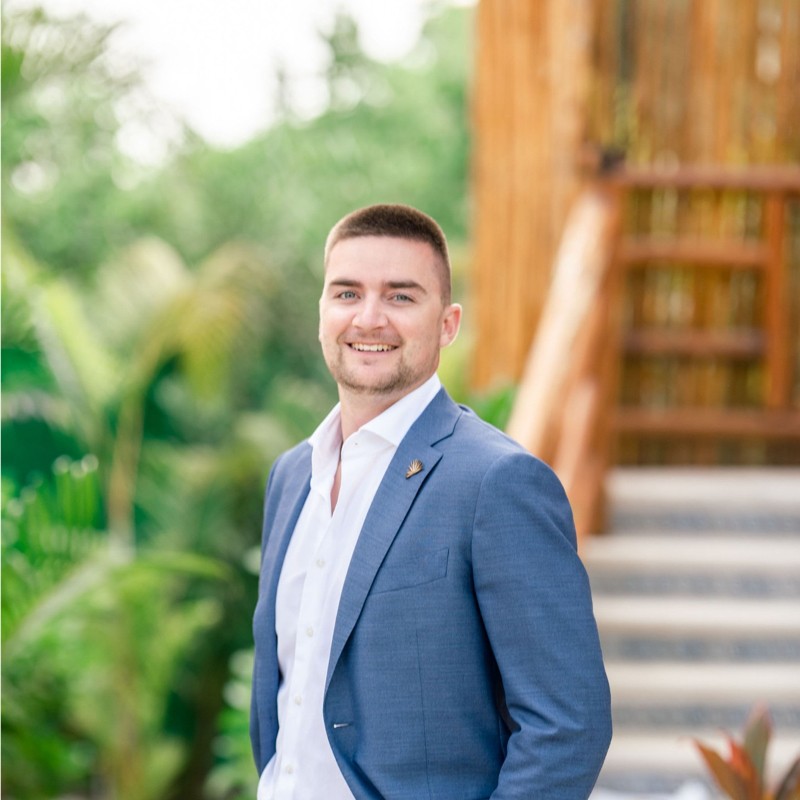
Evan Prasky. Army veteran and Ph.D. student in Environmental Conservation at UMass Amherst.
Army Veteran
Ph.D. Student, UMass Amherst
Environmental Conservation
Causal-Modeling Researcher
I'm an Army Veteran and Ph.D. student at UMass Amherst studying environmental conservation with a focus on complex socio-ecological interactions. My research investigates human–wildlife conflicts in aquatic ecosystems, particularly depredation, where a predator partially or wholly consumes an angler's catch in the process of landing.
I've led multiple causal-mapping workshops with recreational anglers, fisheries managers, and scientists across the U.S. My work has been published in peer-reviewed journals and presented at the World Fisheries Congress.
Two workshops, three years, months of hand-transcription per study. The platform is what I needed and didn't have.
Why it exists
Two workshops with 43 stakeholders took months of hand transcription before any analysis could start. The platform automates that work.
01 / Problem
Surveys flatten reasoning.
Two people give the same answer for completely different reasons. Surveys average that away. I needed to see the reasons — how charter captains, anglers, managers, and scientists actually thought about shark depredation.
02 / Breaking point
22 captains. 21 scientists. Months of transcription.
Gulf Shores in 2022. Seattle in 2024. Every workshop ran on facilitator teams, travel budgets, and hand-coded models. Most of the timeline went to processing, not analysis.
03 / What was missing
One place for the whole study.
Survey design, response collection, group comparisons and figures in a single platform, so the hand-transcription step goes away.
04 / What it has to be
Studies that build on each other.
Survey the same people again next year, or add a new group, and compare the cohorts directly, with every method cited along the way.
Research
Publications and stakeholder workshops in the Gulf of Mexico and the Pacific Northwest.
01
Publications
- Prasky, E. G., Drymon, J. M., Mitchell, J. D., et al. (2025). A framework for fuzzy cognitive mapping workshops: shark depredation as a case study. Fisheries, 50(12), 538–547. DOI (opens in new tab)
- Drymon, J. M., Osowski, A., Jefferson, A., et al. (2022). Co-producing a shared characterization of depredation in the Gulf of Mexico reef-fish fishery. SEDAR74-DW-32.
- Gervasi, C. L., McPherson, M., Karnauskas, M., et al. (2023). Using stakeholder knowledge to better understand uncertainty in the Gulf of Mexico red-snapper stock-assessment model. SEDAR74-RW-01.
02
Workshop facilitation
- April 2022 · Gulf Shores, AL: 22 charter-for-hire captains across 5 Gulf states.
- March 2024 · Seattle, WA: 21 fisheries scientists and managers from the U.S., Australia, and South Africa.
- Collaborations with Mississippi State, Michigan State, University of South Alabama, and Queensland Government Department of Primary Industries.
03
Education & service
- Ph.D. in Environmental Conservation (in progress), University of Massachusetts Amherst.
- M.S. in Marine and Environmental Science, Northeastern University.
- U.S. Army Veteran. Leadership, discipline, and a commitment to service that informs my approach to research and entrepreneurship.
Get access
We're in closed beta and not charging yet. Join the waitlist to keep the founding rate for two years after public launch.
Join the beta waitlist →